Letter from the Founder
Dear Future Contributors,
I want to personally welcome you to I & C Stories and thank you for your interest in publishing with us.
Before we talk about stories, submissions, or publication, I want you to know one thing: I know what it's like to sit where you're sitting. I've spent decades writing, revising, submitting, collecting rejections, and wondering whether anyone on the other side of the process actually saw what I was trying to accomplish. I've waited weeks and months for responses, refreshed my inbox more times than I care to admit, and questioned whether a story was good enough to send out one more time. Like many writers, I've encountered my share of dead ends, unanswered submissions, and opportunities that weren't quite what they seemed.
Because of that, I don't expect you to trust me simply because I'm the founder. Trust isn't granted by a title. It's earned through actions. My goal is to earn that trust every day by being transparent, ethical, and humane in the way I interact with writers, artists, readers, and staff.
Some of you may wonder who I am or what qualifies me to sit on this side of the desk. I could point to degrees, internships, memberships, and professional accomplishments, but those things only tell part of the story. What matters more is that I've spent most of my life surrounded by stories.
Books were my constant companions growing up. My family moved frequently, and while schools, neighborhoods, and circumstances changed, stories were always there. They introduced me to impossible worlds, helped me understand difficult realities, and reminded me that none of us are truly alone. Through stories, I found adventure, comfort, hope, and connection.
Eventually, reading led to writing. I wanted to create the same kinds of experiences that had meant so much to me. I wanted to build worlds readers could get lost in and create characters who might help someone feel seen, understood, or simply entertained for a little while.
That belief—that stories matter—has never changed. It remains at the heart of everything we do here.
Thank you for considering I&C Stories. Whether you submit a story, create artwork, read an issue, or simply stop by to see what we're building, I'm grateful you're here.
Welcome to the community.
Happy Writing!
Tammie Phillips
Founder & Editor-in-Chief
Why We Built I & C Stories
We started I & C Stories because stories matter.
That may sound simple, but it is a belief that has guided my life as both a reader and a writer. Stories entertain us, challenge us, comfort us, and remind us that we are not alone. They allow us to step into someone else's shoes, explore impossible worlds, and experience emotions that might otherwise remain beyond our reach.
But stories do not appear out of thin air. Behind every story is a writer who invested their time, energy, creativity, and courage into creating something new. As writers, we spend countless hours drafting, revising, researching, and polishing our work before we ever click the submit button.
Too often, however, the submission process can feel distant and impersonal. Writers send their work into the world and wait. Sometimes they receive a response. Sometimes they don't. Sometimes they receive feedback that helps them grow. Sometimes they receive little more than a generic form letter.
We wanted to build something different.
At I & C Stories, our goal is not simply to publish stories. We want to create an environment where writers feel respected throughout the publication process. That commitment is reflected in the systems, policies, and procedures that guide our work every day.
We believe in transparency. Contributors should know what to expect from us, how decisions are made, and where their work stands in the process.
We believe in humane publishing practices. Respect for contributors begins with respect for the people doing the editorial work as well. Sustainable workloads allow us to give each submission the attention it deserves.
We also believe that talent and potential can be found anywhere. Too often, aspiring writers encounter barriers that have little to do with the quality of their work and everything to do with navigating an industry that can feel confusing, inaccessible, or intimidating. While publication will always require strong storytelling and craftsmanship, we believe the path to publication should be as transparent and approachable as possible. Our goal is not to lower standards. Our goal is to lower unnecessary barriers so writers can focus on what matters most: telling great stories.
Most importantly, we believe in community. Writing is often a solitary pursuit, but storytelling has always been communal. Readers, writers, artists, editors, and publishing professionals all play a role in bringing stories to life. We want I & C Stories to be a place where those groups can come together to celebrate the written word.
Will we always get everything right? Probably not. We are human, and like every publication, we will continue learning and growing over time. What we can promise is that we will approach our work with integrity, transparency, and a genuine love of storytelling.
I & C Stories exists because stories matter.
More importantly, the people who create them matter too.
Quality First. Always.
We want to take a moment to address what we mean by “Quality First. Always.”
I & C Stories is committed to lowering barriers and creating a more approachable publishing experience, but that does not mean we’re lowering standards. In fact, quality is the foundation upon which everything else is built.
When we talk about transparency, education, accessibility, and community, we are not talking about making publication easier. We are talking about making the process clearer. Great storytelling still requires creativity, craftsmanship, revision, and dedication. Every story published by I & C Stories must earn its place through the strength of the work itself.
We use blind review to ensure that the selection of each piece is based solely on the quality of the writing, not a writer's publication history, reputation, or personal connections.
We feel that it serves readers by ensuring that every issue delivers engaging, polished stories worth their time and attention.
It serves contributors by placing their work alongside other strong pieces and providing editorial support that helps each story reach its full potential.
It serves the publication by helping us build trust with our audience and maintain the standards that define our identity.
For that reason, every submission receives multiple levels of review. Stories are evaluated for craftsmanship, clarity, originality, theme fit, and overall impact. Some stories may be accepted immediately. Others may receive requests for revision. Some may be declined. These decisions are never made lightly.
At I & C Stories, we are looking for stories that demonstrate potential, purpose, and a willingness to engage in the editorial process when needed. Quality is also the reason we believe in sustainable editorial workloads. An exhausted editor cannot give a story the attention it deserves. By maintaining realistic review expectations and thoughtful workflows, we create space for meaningful evaluation rather than rushed decisions.
We believe great stories deserve great editorial care. We believe contributors deserve thoughtful consideration. We believe readers deserve the strongest work we can provide.
Those beliefs guide every decision we make.
Quality First. Always.
Not because quality is the easiest path.
Because it is the right one.
Why We Chose Blind Submissions
We chose blind submissions for one simple reason: we want stories to be judged on the strength of the work itself. A contributor's publication history, social media following, academic credentials, or personal relationship with a member of our staff should not determine whether a story is accepted. While no review process is perfect, blind submissions help us keep the focus where it belongs: on the writing.
Blind review helps us evaluate stories on their merits. By removing identifying information during intake and evaluation, we create space for both established and emerging writers to compete on equal footing. If the same contributor is accepted repeatedly, it will be because they consistently met the quality standards of the publication—not because their name was recognized.
Once a story moves into editing, however, collaboration becomes the priority. Effective developmental editing, line editing, and copyediting require communication between contributors and editors. For that reason, contributor identities may become known after a piece advances beyond initial evaluation and enters the editorial process.
It is in this spirit that we reroute submissions whenever a conflict of interest arises. If an editor recognizes a submission, knows the contributor personally, has a professional relationship with the contributor, or believes their ability to evaluate the work impartially may be compromised, the submission will be reassigned to another qualified member of the editorial team whenever possible.
Blind submissions are not about excluding established writers or guaranteeing publication for new ones. They are about ensuring that every story receives the same opportunity to succeed: a fair evaluation based on the quality of the work itself.
The Themes of 2027
Why Themes Instead of Genres
As a writer, I always struggled with finding the right submission pathway. Not because I didn't know what genre my work fell in, but because it tends to fall into multiple genres. A romantic thriller here, an alien race hiding on Earth with fantastical abilities there, so on and so forth. What I found was that sometimes a great story doesn't fit in a traditional box and different genres can sit in the same conversation—and that's okay.
Now, before you all go hunting through years’ worth of stories trying to find a story that “fits” I want you to take a deep breath and look instead for the story that represents your best work, let us see where it fits. Themes allow stories from different genres to speak to one another. A science fiction story and a romance story may have little in common on the surface, but both may explore resilience, sacrifice, belonging, or hope. By organizing issues around themes rather than genres, we create space for different kinds of stories to participate in the same conversation. And if it doesn't fit this year, who knows? It may be exactly the kind of story we're looking for next year—or the year after that.
As a writer, I always struggled with finding the right place to submit my work. Not because I didn't know what genre it belonged to, but because it often belonged to more than one. A romantic thriller here, an alien race hiding on Earth with fantastical abilities there, and plenty of stories somewhere in between. What I learned is that great stories don't always fit neatly into traditional boxes, and different genres can sit in the same conversation—and that's okay.
January 2027
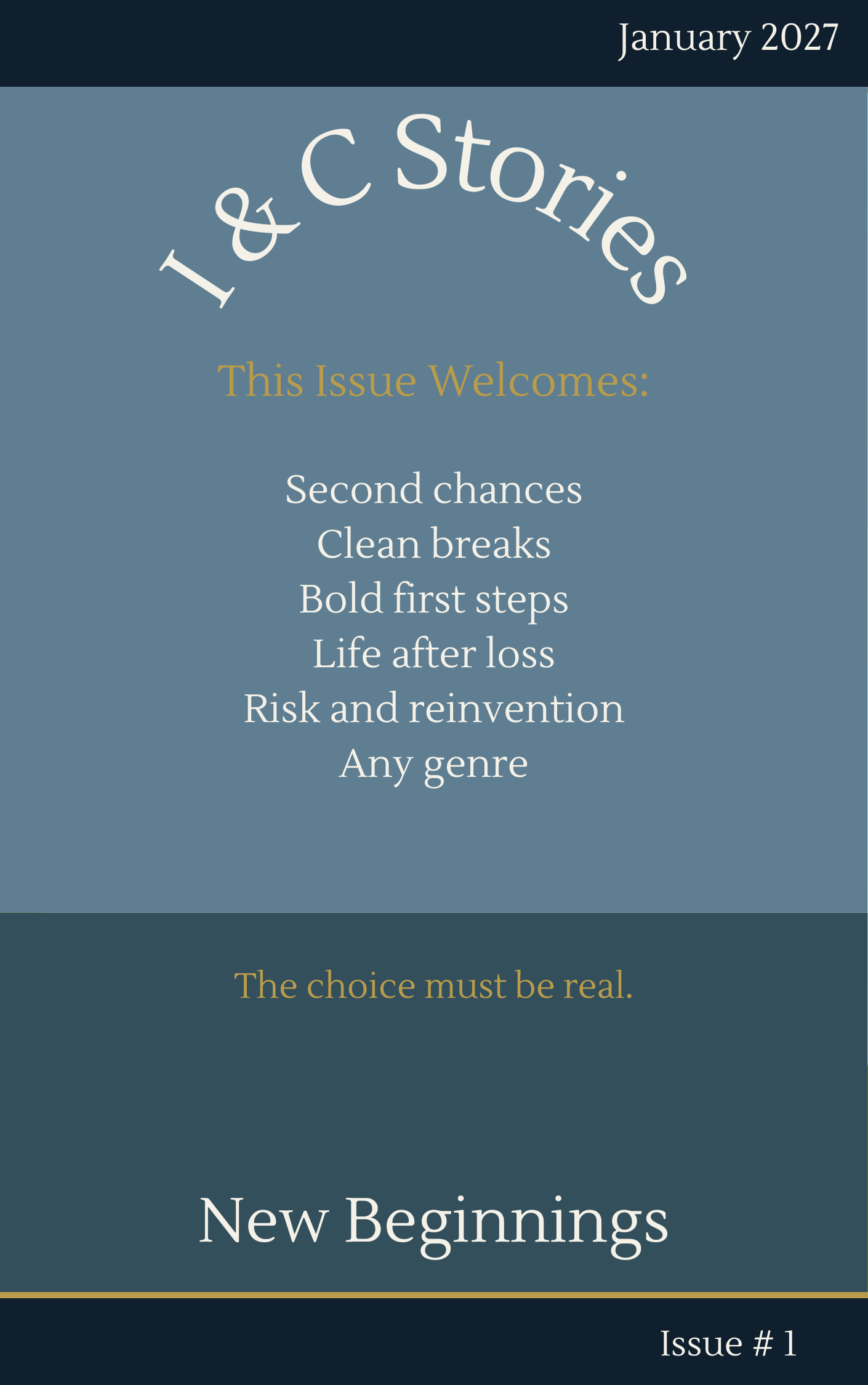
Theme Explained:
Every ending creates the possibility of a beginning. While stories may be set around the New Year, they do not have to be. New beginnings can happen on any day of the year. We are looking for stories about characters at a crossroads, deciding what comes next. Whether they are rebuilding after tragedy, starting over in a new place, or pursuing a long-delayed dream, something new should emerge because of the choices they make.
This Month's Golden Rule Explained:
The choice must be real.
By that, we mean the choice must have meaningful consequences. The choice between pancakes and waffles is not the point; the choice between staying and leaving is. A new beginning should require something of the character. It should involve risk, sacrifice, uncertainty, or change. The outcome does not have to be positive, but the decision should matter. If the choice were removed from the story, the story itself would be fundamentally different.
February 2027
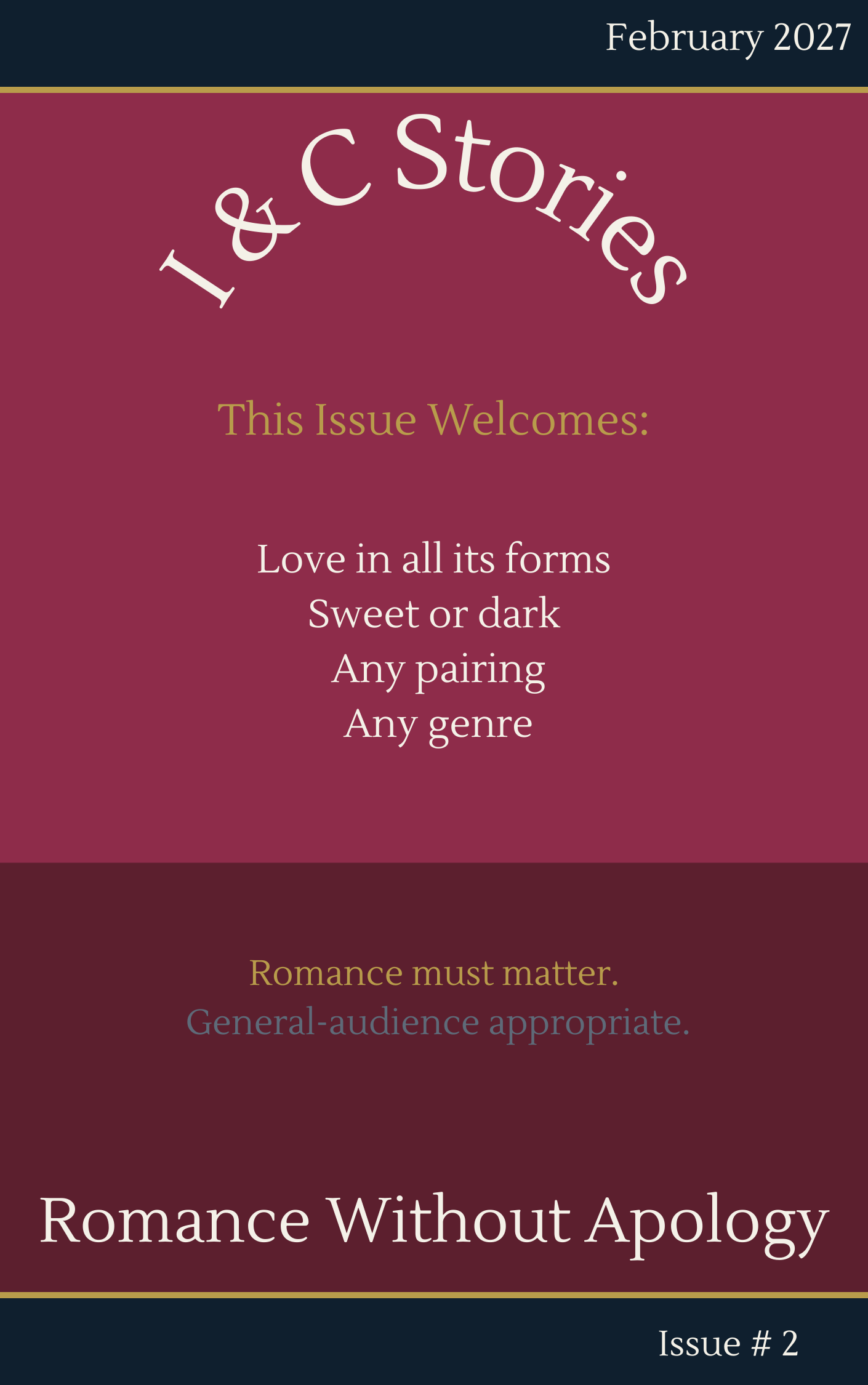
Theme Explained:
This month celebrates stories that place love at the center of the narrative and allow it to matter without apology. Whether it takes the form of your typical meet-cute, love at first, or second, or twelfth sight, or takes a darker turn, or is completely atypical of “romance.” For example, perhaps the characters are older and instead of falling in love through grand gestures and dramatic obstacles, they discover love in the quiet moments of everyday life. Or perhaps the relationship is unconventional, complicated, or even dark. What matters is not the form the romance takes, but that it remains central to the story being told.
This Month's Golden Rule Explained:
Romance must matter.
Whether set in a dystopian society or rural PA or even a serial killer’s basement, the romance should drive the story. If the romance were removed from the story, the story itself would be fundamentally different.
March 2027
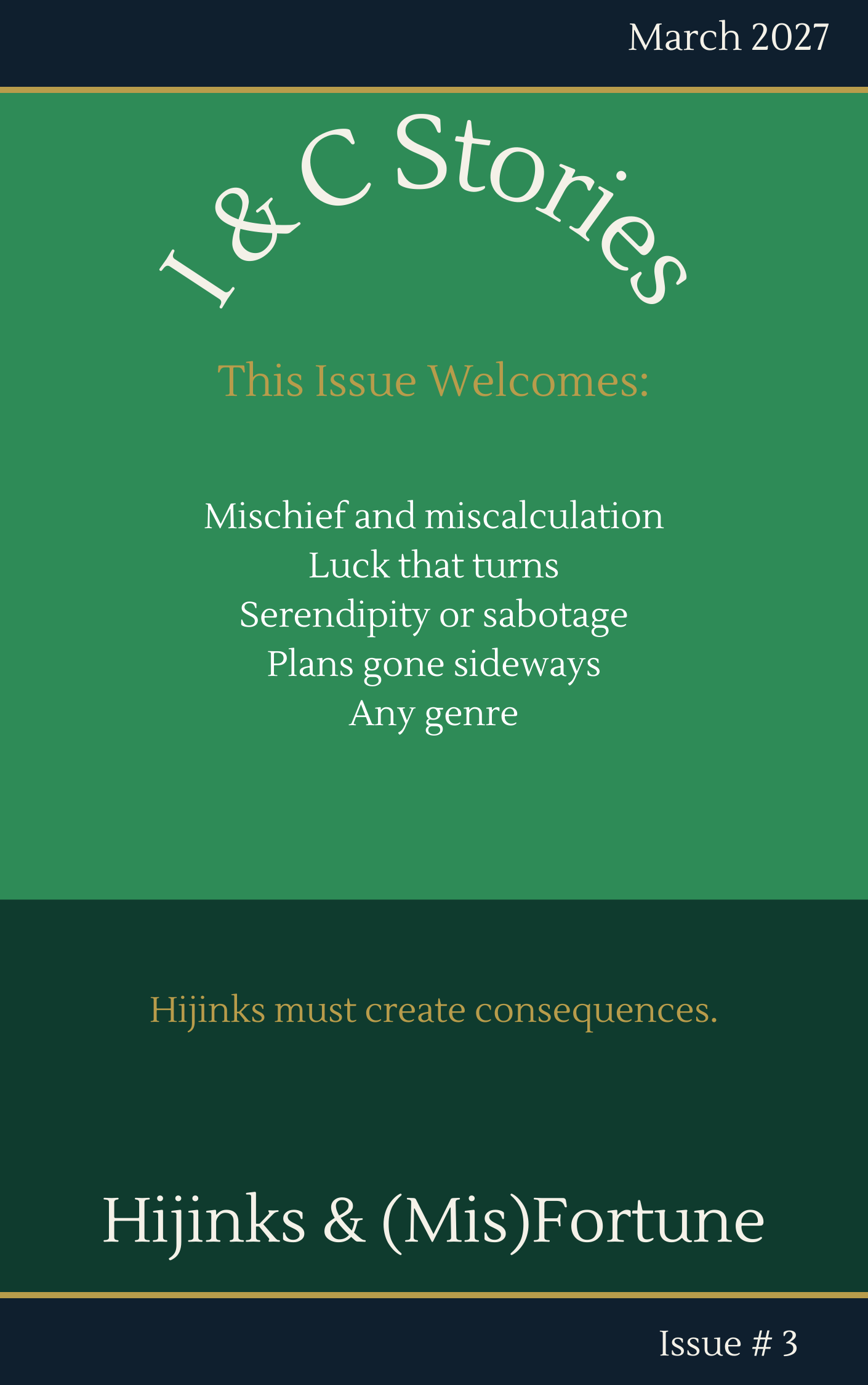
Theme Explained:
March is dedicated to luck, mischief, and plans that go gloriously sideways. Maybe a harmless prank spirals out of control. Maybe an unexpected stroke of luck changes everything. Maybe a carefully crafted scheme falls apart at the worst possible moment. Whether fortune smiles on your characters or leaves them scrambling to clean up the mess, we are looking for stories where the unexpected creates opportunities, obstacles, and consequences.
This Month's Golden Rule Explained:
Hijinks must create consequences.
By that, we mean the hijinks should matter. A misunderstanding, stroke of luck, act of mischief, or plan gone sideways should create meaningful consequences for the characters or the story. The outcome may be humorous, dramatic, fortunate, unfortunate, or a little of all four, but the event should change something. If the hijinks were removed from the story, the story itself would be fundamentally different.
April 2027
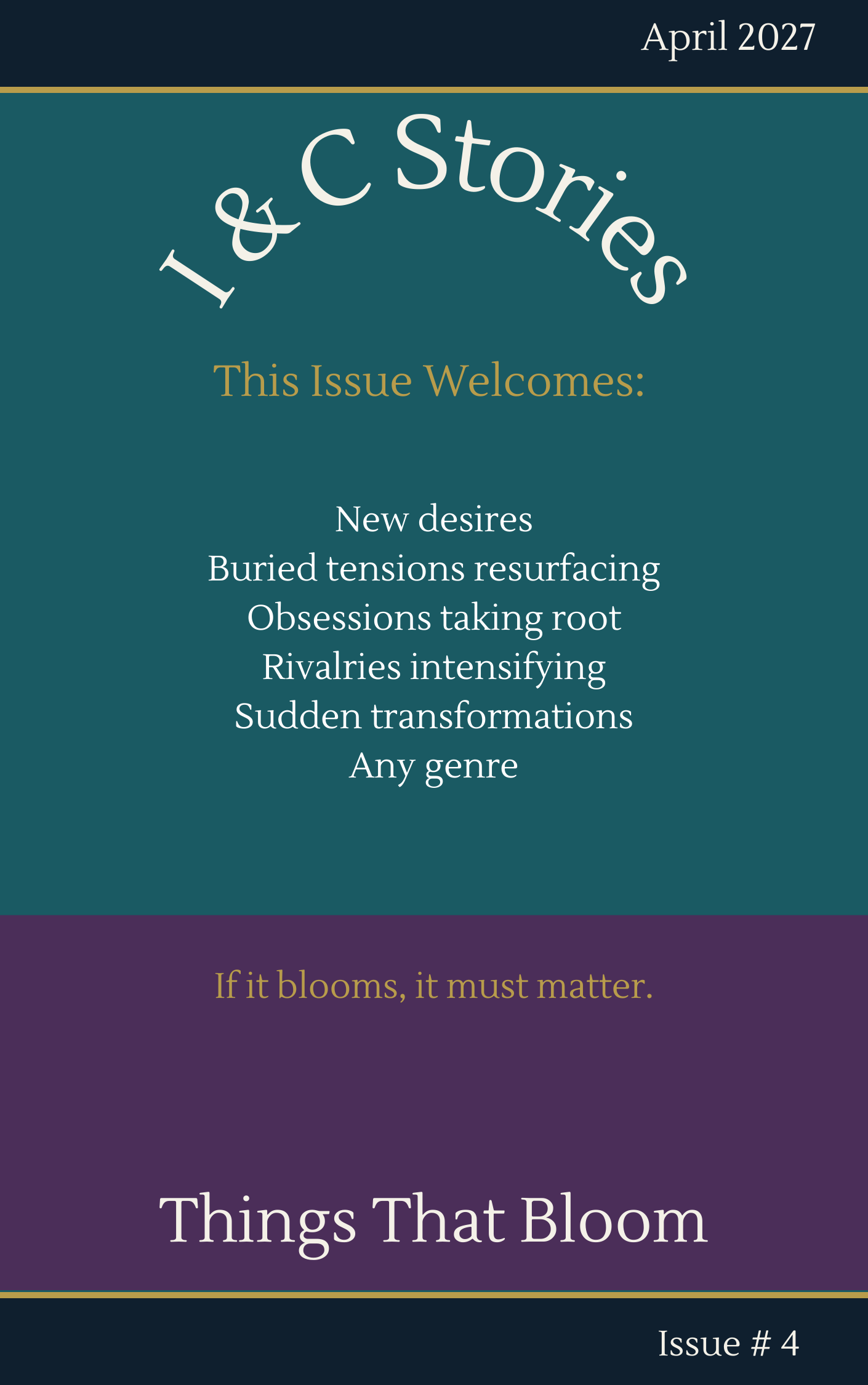
Theme Explained:
April is dedicated to growth, transformation, and potential realized. Just as spring brings new life after a long winter, we are looking for stories in which something begins to emerge. Perhaps a character discovers a hidden talent, a relationship deepens, a community rebuilds, or a long-buried truth finally comes to light. Growth is not always easy, and not everything that blooms is beautiful, but something within the story should grow, evolve, or transform over the course of the narrative.
If it blooms, it must matter.
Growth may be physical, emotional, relational, spiritual, or even destructive, but it must be meaningful to the story. A character should not finish the story exactly as they began it. A relationship should not remain unchanged. A revelation should have an impact. Whatever blooms within the story, it should influence the characters, the plot, or both. If the element that blooms were removed from the story, the story itself would be fundamentally different.
May 2027
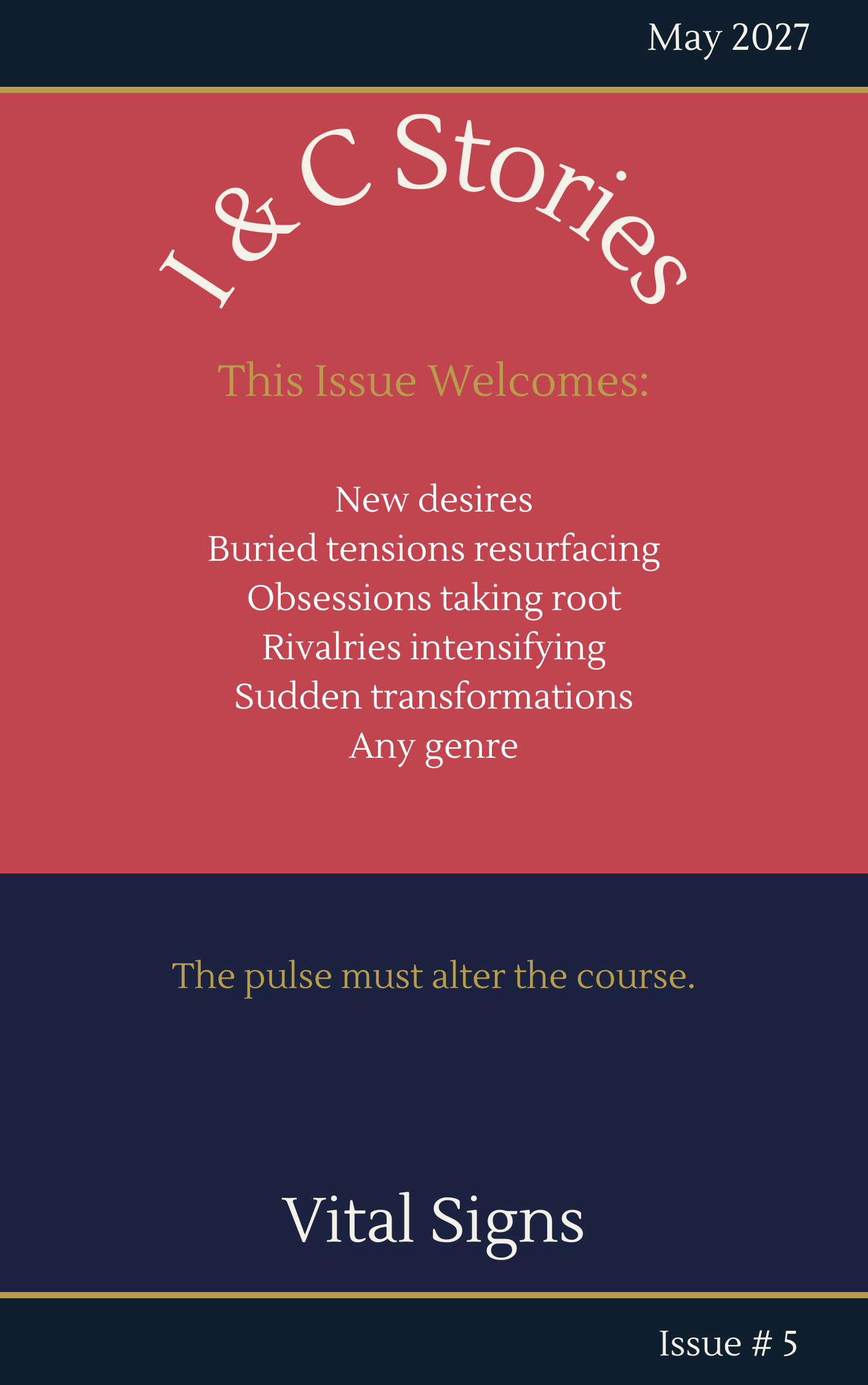
Theme Explained:
Sometimes the first sign of change is barely noticeable. Relationships deepen. Rivalries reawaken. Curiosities become obsessions. Hidden tensions rise to the surface. We are looking for stories where something already present begins to intensify, revealing that change is underway.
The pulse must alter the course.
The growing emotion, conflict, desire, obsession, or transformation cannot simply exist in the background. It must influence the direction of the story. A friendship becoming romance should change how the characters interact. A resurging rivalry should affect decisions. A growing obsession should shape behavior. Whatever intensifies within the story should alter the characters, the plot, or both. If the pulse were removed from the story, the story itself would be fundamentally different.
June 2027
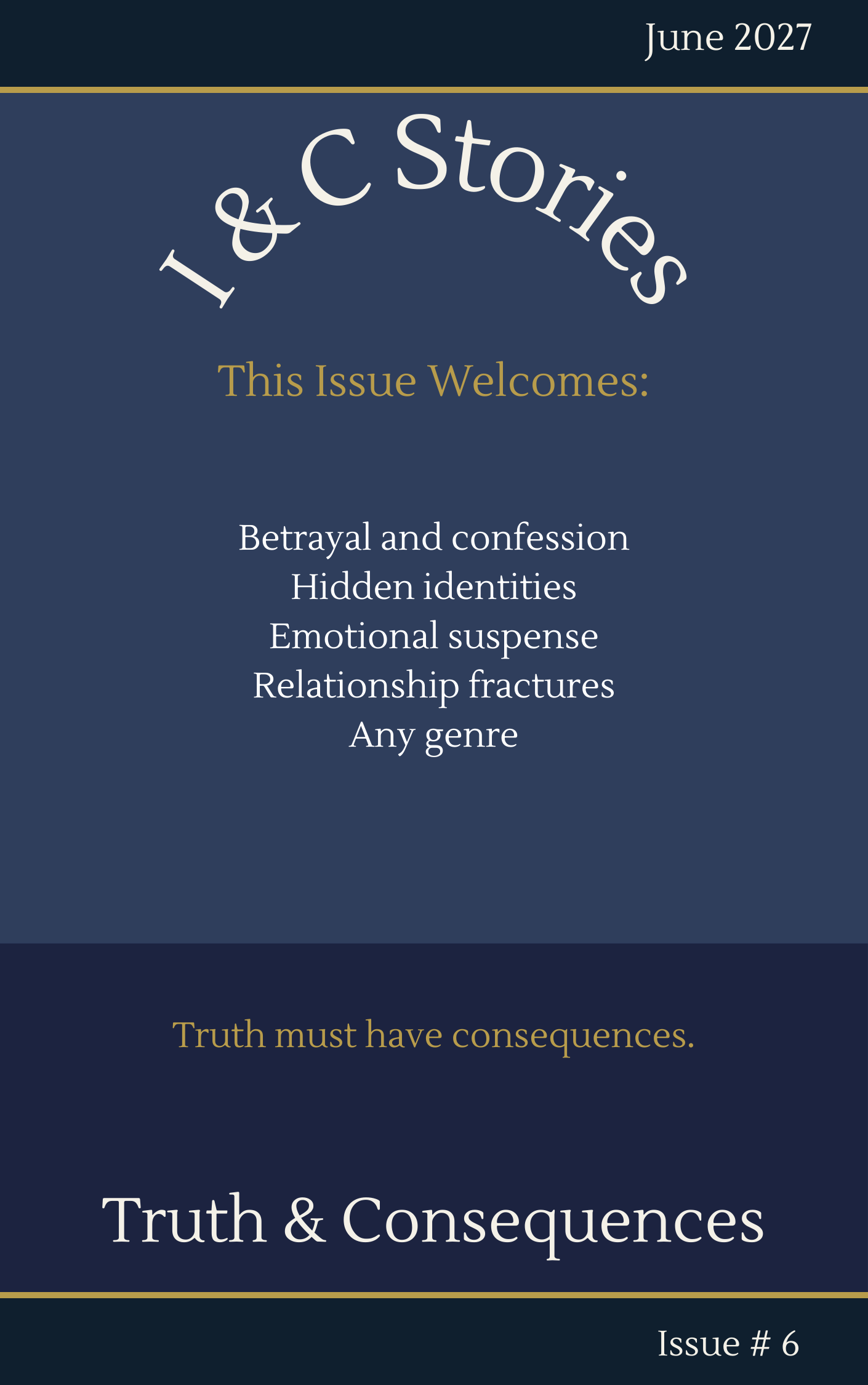
Theme Explained:
The fallout that follows revelation is often more powerful than the revelation itself. Secrets come to light, lies unravel, identities are exposed, and hidden realities emerge—but the discovery is only the beginning. We are looking for stories where truth changes relationships, choices, circumstances, or futures in meaningful ways.
Truth must have consequences.
The revelation cannot simply exist for shock value. A secret exposed, a lie uncovered, or a hidden truth revealed should alter the course of the story. Relationships may change, decisions may be reconsidered, trust may be broken, or new opportunities may emerge. Whatever truth comes to light, it should influence the characters, the plot, or both. If the truth were removed from the story, the story itself would be fundamentally different.
July 2027
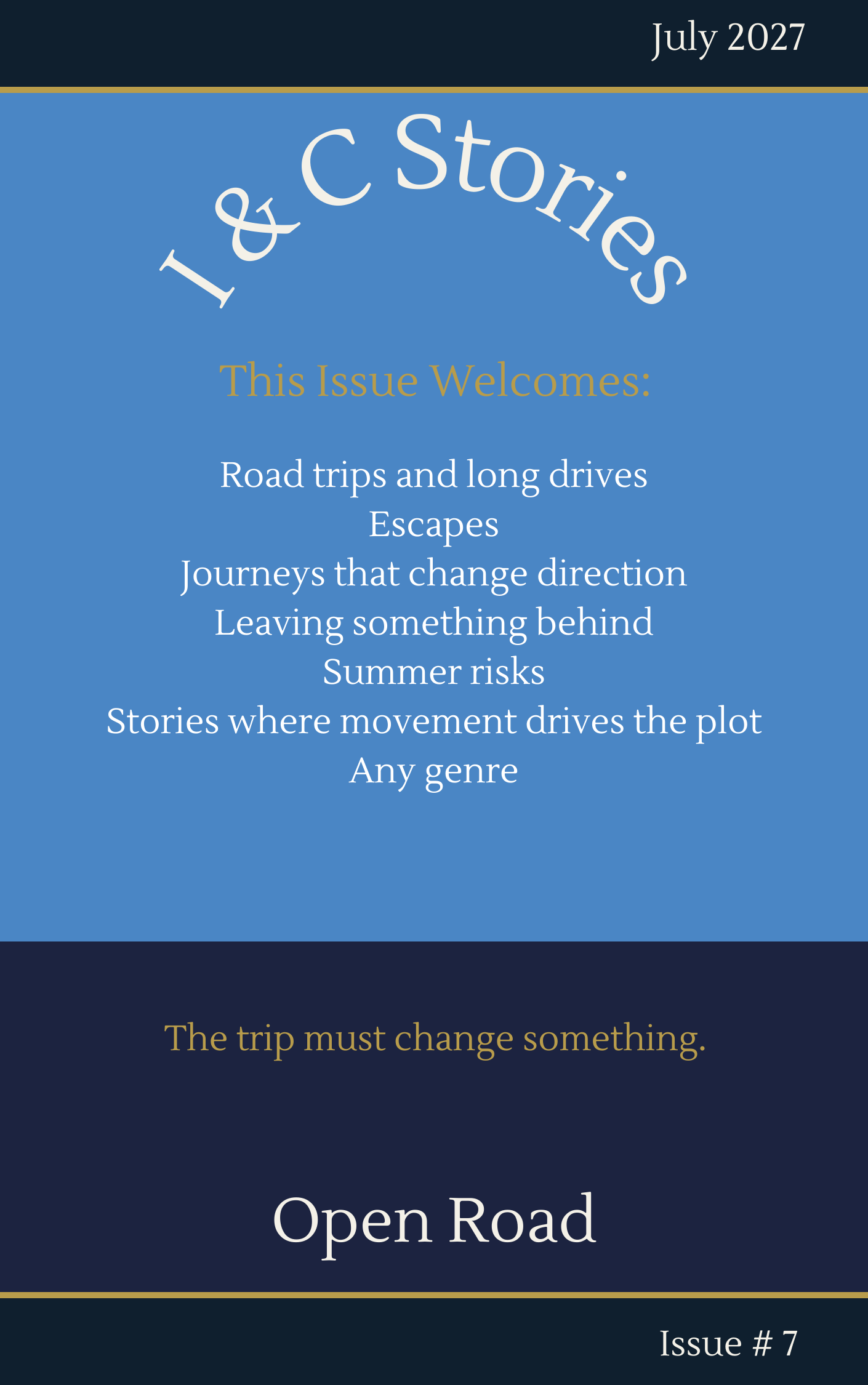
Theme Explained:
The most important journeys are the ones that change us. We are looking for stories where movement drives the plot and the experiences along the way matter more than the destination itself. New places may be discovered, obstacles may be overcome, and unexpected connections may be formed, but the heart of the story lies in how the journey shapes the characters and their world.
The trip must change something.
The journey itself is the point. The experiences, encounters, discoveries, setbacks, and choices along the way should leave a lasting impact. The change may be physical, emotional, relational, spiritual, or ideological, but something should be different because of the trip. If the journey were removed from the story, the story itself would be fundamentally different.
August 2027
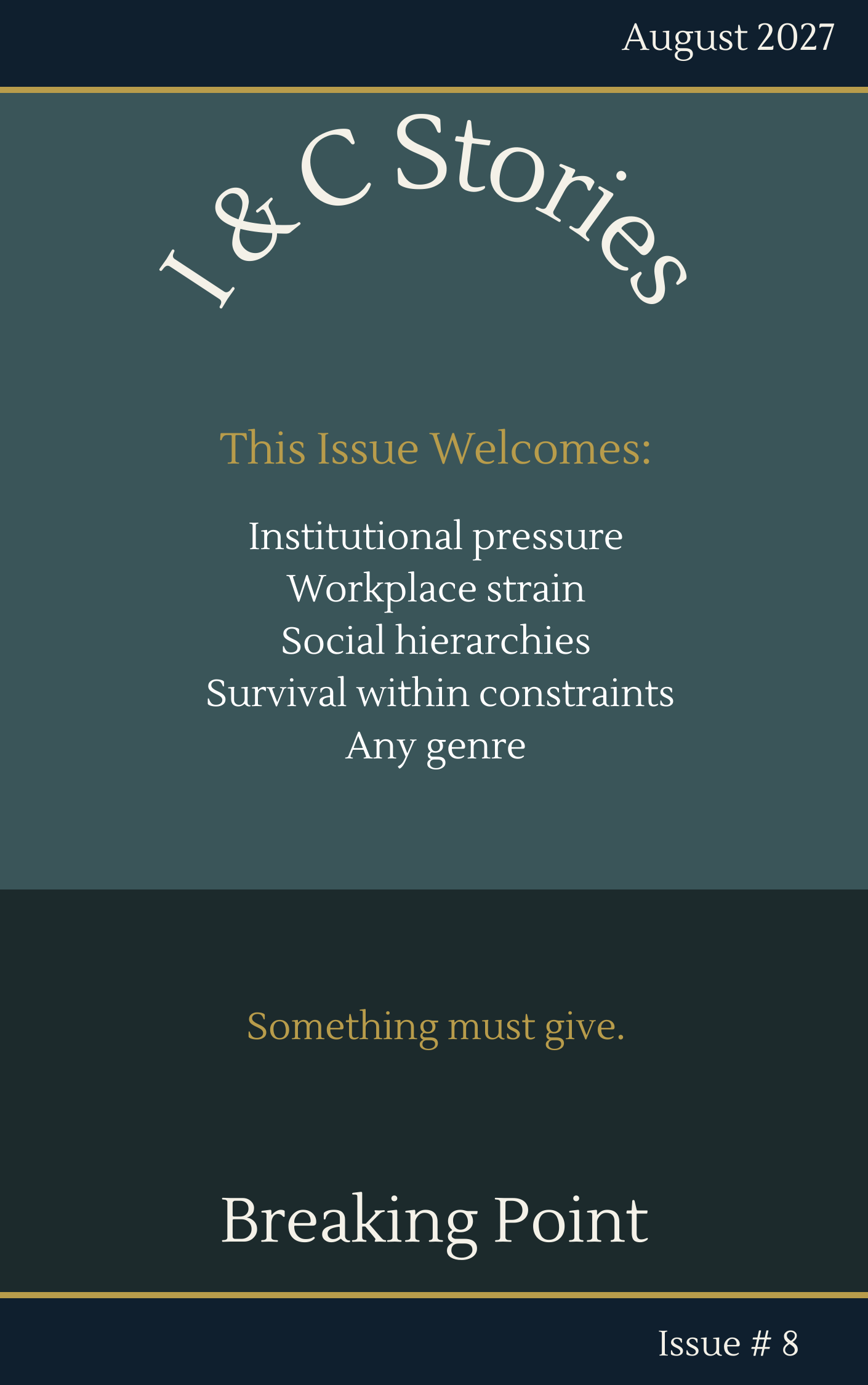
Theme Explained:
Pressure can only build for so long before something gives. Tensions rise, burdens grow heavier, conflicts escalate, and difficult choices loom until something finally gives. We are looking for stories that examine what happens when people, relationships, communities, systems, or even entire worlds reach their limits and are forced to change.
Something must give.
Pressure alone is not enough. The strain should lead to a meaningful shift, collapse, revelation, decision, or transformation. Whether a relationship fractures, a secret erupts, a plan fails, or a character finally reaches their limit, the story should demonstrate the consequences of sustained pressure. If nothing gives, the story has not yet reached its breaking point.
September 2027
Theme Explained:
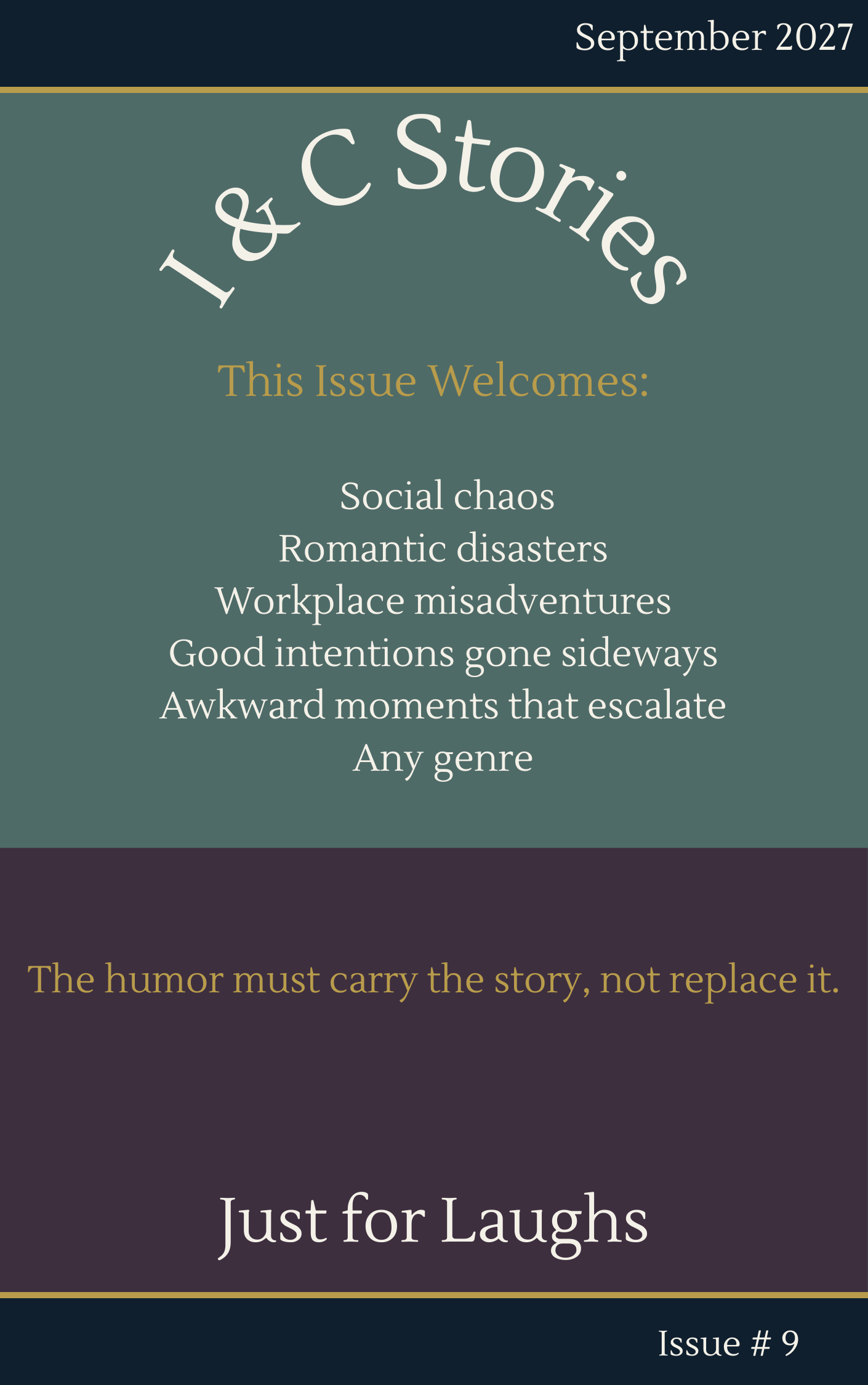
The best laughs come from characters trying their best while everything around them falls apart. Whether the comedy comes from social chaos, romantic disasters, workplace misadventures, awkward misunderstandings, or good intentions gone wrong, we are looking for stories that use humor as a central storytelling element. The funniest moments often arise from relatable situations, escalating complications, and characters trying their best while everything around them falls apart.
The humor must carry the story, not replace it.
Humor should emerge naturally from the characters, situations, and events of the narrative. While the story may be lighthearted, comedic, or absurd, it should still contain a meaningful plot. Awkward moments, misunderstandings, escalating disasters, and unexpected outcomes can all provide humor, but they should contribute to the story rather than distract from it. If the humor were removed, the story itself would be fundamentally different.
October 2027
Theme Explained:
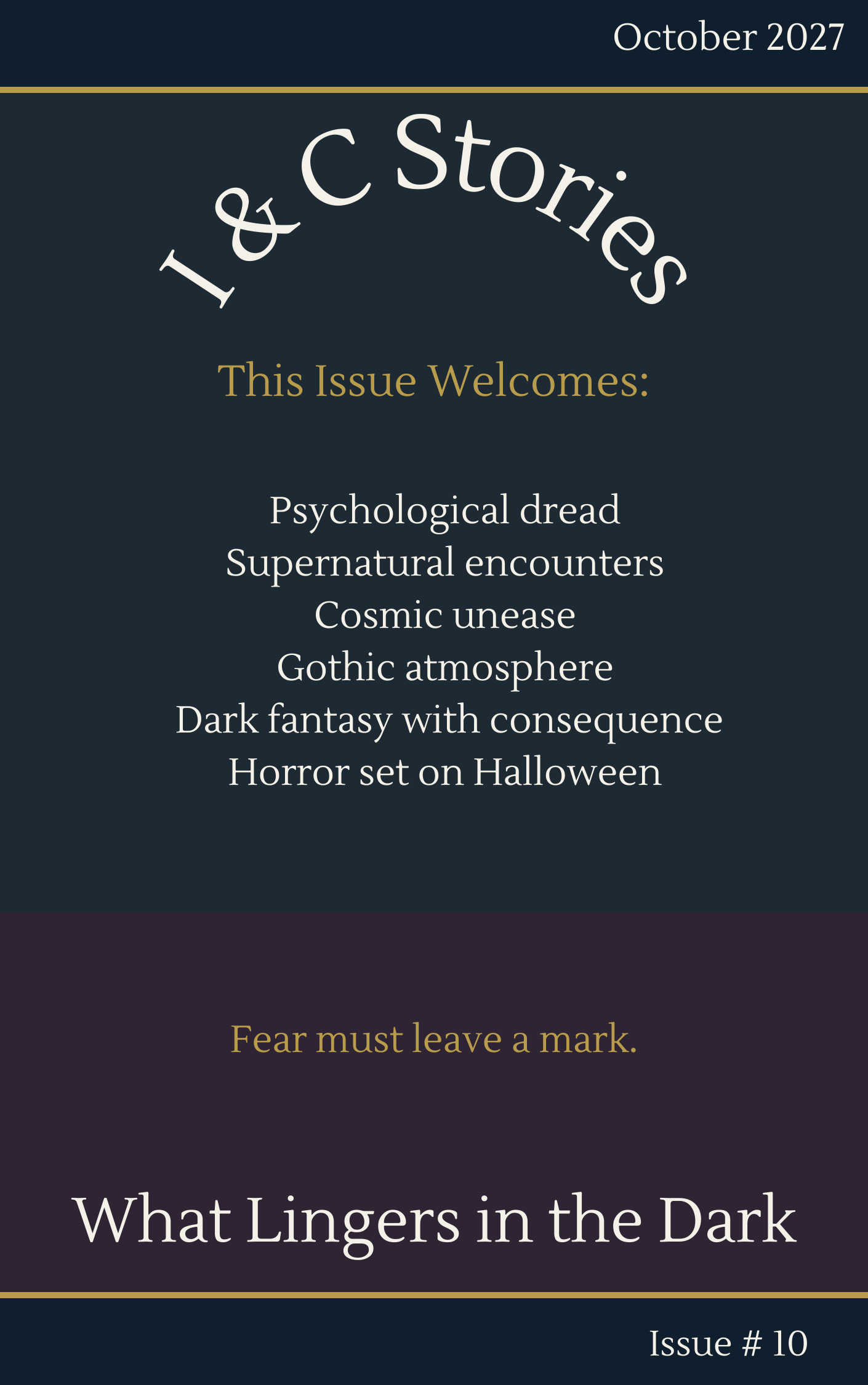
Some fears fade with the dawn. Others leave a mark that never fully disappears. Whether the darkness takes the form of a supernatural presence, psychological dread, cosmic unease, a haunting memory, or the consequences of past actions, we are looking for stories that leave a lasting impression. The strongest submissions will focus not only on what hides in the dark, but on what remains when the lights return.
Fear must leave a mark.
The mark may be emotional, psychological, physical, supernatural, or even societal, but something should remain after the frightening moment has passed. A character's choices may change, relationships may suffer, a community may be altered, or a mystery may continue to haunt those involved. If the fear leaves no lasting trace, the story has not fully explored what lingers in the dark.
November 2027
Theme Explained:
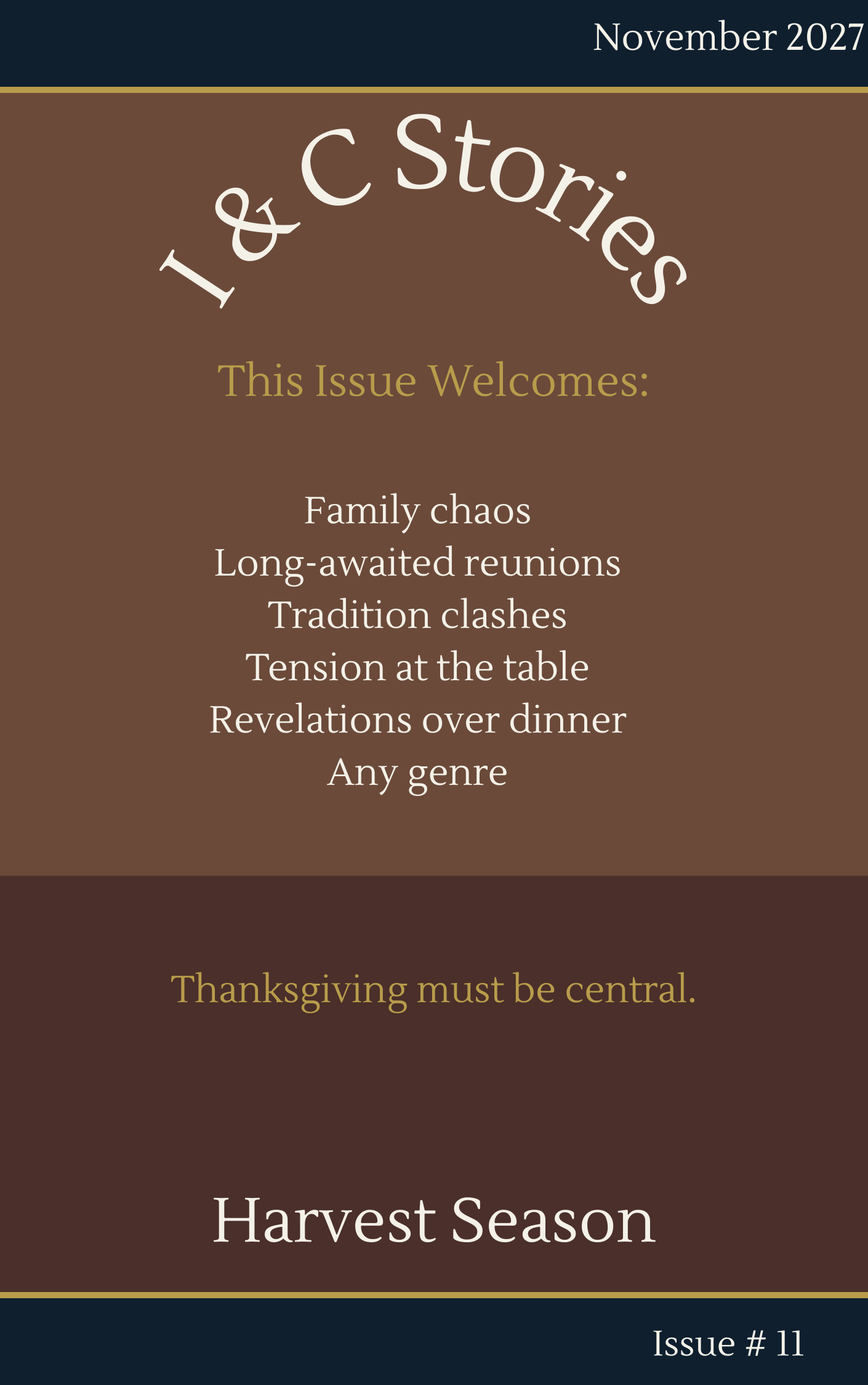
Some families gather to celebrate. Others gather to settle old scores. Family traditions, reunions, gratitude, community, hospitality, long-awaited homecomings, and the occasional dinner-table disaster all have a place at the table. Whether heartfelt, humorous, dramatic, or bittersweet, we are looking for stories that explore the connections, conflicts, and shared experiences that make Thanksgiving memorable.
Thanksgiving must be central.
Thanksgiving should play a meaningful role in the narrative rather than simply serving as background decoration. The holiday may bring families together, create opportunities for conflict or reconciliation, inspire reflection, or influence the choices characters make. Whatever form it takes, Thanksgiving should be important to the characters, the plot, or both. If the holiday were removed from the story, the story itself would be fundamentally different.
December 2027
Theme Explained:
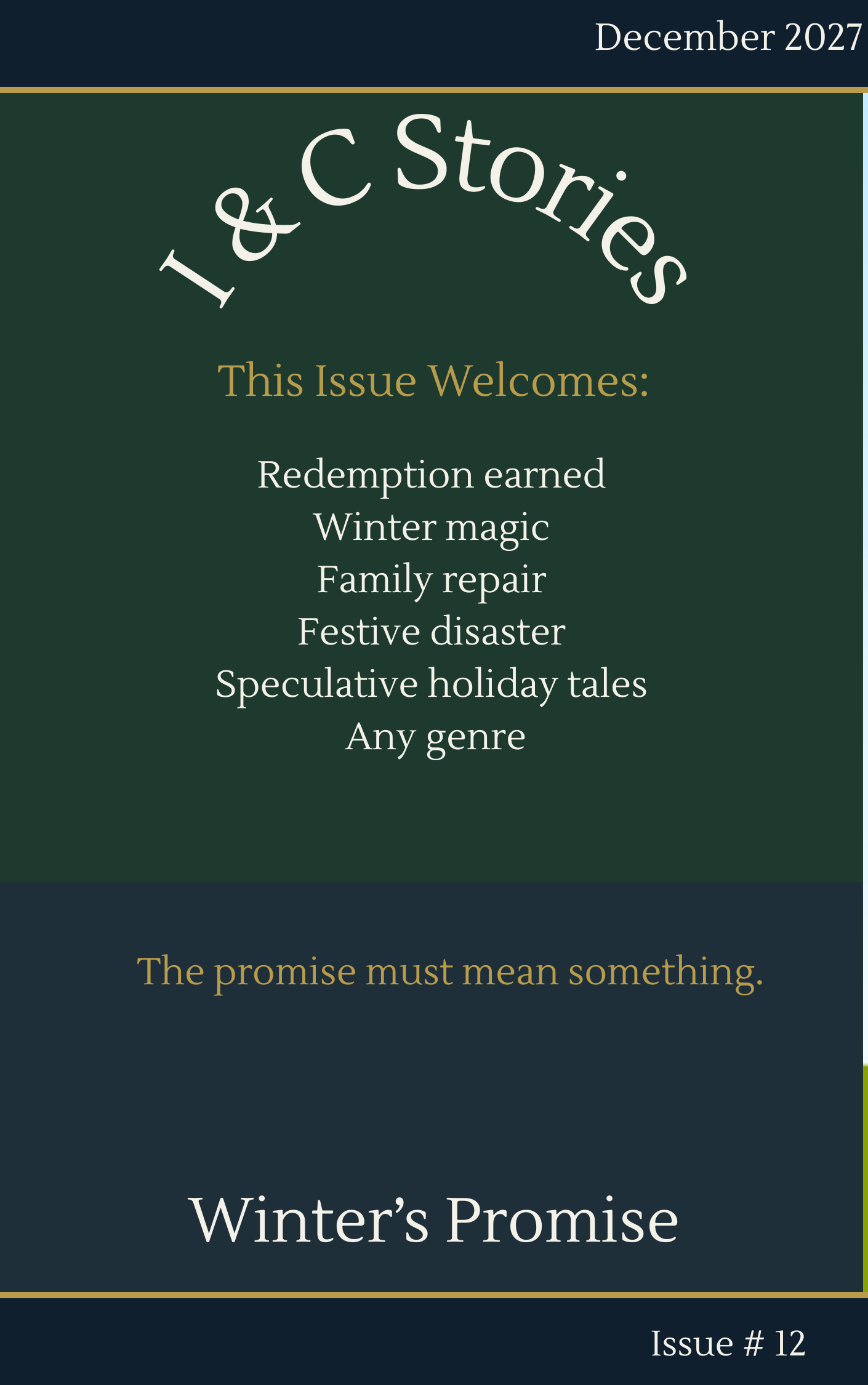
The coldest seasons often teach us what is worth holding onto. Whether through family repair, earned second chances, winter magic, festive celebrations, or speculative holiday traditions, we are looking for stories that explore what remains worth believing in when the year draws to a close. The strongest submissions will center on a promise, hope, or possibility that carries meaningful weight for the characters and the story.
The promise must mean something.
The promise at the heart of the narrative should carry meaningful weight. It may take the form of hope, redemption, reconciliation, a second chance, a commitment, or the possibility of a brighter future, but it should matter to the characters and influence the story. The promise does not need to be fulfilled, but it should shape the choices, relationships, or events that follow. If the promise were removed from the story, the story itself would be fundamentally different.